
Introduction
Maritime and port facility operators across the U.S. are navigating one of the most long-delayed federal security mandates in recent history — the TWIC Reader Final Rule. Originally published in 2016, this requirement has been pushed back multiple times due to congressional mandates, COVID-19 enforcement holds, and ongoing risk analysis by the RAND Corporation's Homeland Security Operational Analysis Center.
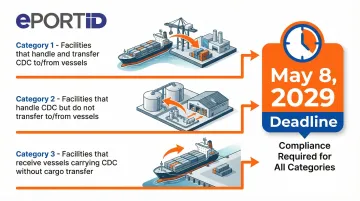
The current compliance deadline stands at May 8, 2029, for the majority of affected facilities.
This extended delay offers a real planning window, but it isn't an indefinite postponement. The final deadline is fixed, and facilities handling Certain Dangerous Cargoes in bulk face substantial capital and operational expenditures averaging over $322,000 per facility.
This article covers what the rule requires, why the 2029 deadline is more firm than previous delays, which facilities are affected, and what operators should do now to get ahead of compliance.
Key Takeaways
- Electronic biometric TWIC inspection is mandatory at Risk Group A maritime facilities under MTSA regulations
- The current compliance deadline for CDC-handling facilities is May 8, 2029, following multiple statutory delays and ongoing HSOAC risk analysis
- Facilities receiving vessels carrying 1,000+ passengers have already been subject to active enforcement since January 1, 2022
- Use the delay window to update Facility Security Plans, evaluate certified readers, and build out biometric access control
What Is the TWIC Card and Why Does It Matter?
The Transportation Worker Identification Credential (TWIC) is a tamper-resistant, biometric smart card issued by the TSA to maritime workers, port employees, truck drivers, longshoremen, and others requiring unescorted access to secure areas of MTSA-regulated vessels and facilities. Issued under the authority of the Maritime Transportation Security Act of 2002 and the SAFE Port Act of 2006, TWIC has been a foundational credential in maritime security since 2007.
What's Stored on a TWIC Card:
| Data Element | Function |
|---|---|
| Fingerprint Templates | Two electronically readable biometric templates for identity verification |
| Digital Facial Image | Visual reference for manual or electronic comparison |
| FASC-N | Federal Agency Smart Credential Number (unique serial identifier) |
| Authentication Certificates | PKI certificates proving the card is not counterfeit |
| PIN | 6- to 8-digit Personal Identification Number selected by the cardholder |
The Critical Distinction: Possession vs. Electronic Inspection
Simply possessing a TWIC card has been required since 2007. The TWIC Reader Rule addresses a separate — and stricter — requirement: electronic verification of that card. Before the Reader Rule, facilities could rely on visual inspection, checking the hologram, expiration date, and photo match. The Reader Rule eliminates that option for Risk Group A facilities, mandating electronic verification that performs biometric fingerprint matching and checks card authenticity, expiration, and revocation status.
Getting a TWIC card requires an in-person visit to a TSA enrollment center to submit biographic information, complete a security threat assessment, and provide biometric data. Cards are mailed once approved — a process that typically takes several weeks before a worker can access secure areas.
What Does the TWIC Reader Final Rule Actually Require?
The Four Mandatory Verification Functions
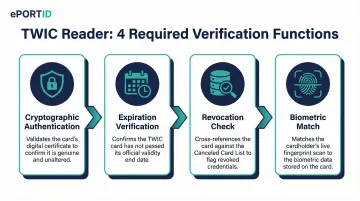
The 2016 TWIC Reader Final Rule established that Risk Group A facilities must deploy electronic TWIC card readers at all access points to secure areas. These readers must verify four specific elements before granting unescorted access:
- Cryptographic Authentication — Runs a challenge/response protocol using the Card Authentication Certificate to confirm the card is genuinely TSA-issued, not counterfeit
- Expiration Verification — Reads the chip electronically to confirm the TWIC is still within its valid date range
- Revocation Check — Cross-references the card against the TSA-supplied Canceled Card List (CCL) to flag cards reported lost, stolen, or revoked
- Biometric Match — Matches the live fingerprint sample to the biometric template stored on the TWIC or within the facility's Physical Access Control System
Visual vs. Electronic Inspection: Closing the Security Gap
Visual inspection cannot detect revoked cards or cryptographically authenticate the microchip. That gap — a valid-looking card that has actually been revoked — is precisely what prompted Congress to act. The statutory mandate in 46 U.S.C. 70105(k)(3) explicitly directed the Secretary of Homeland Security to deploy electronic transportation security card readers. This is a Congressional mandate, not merely a regulatory preference.
Reader Types and the TSA Qualified Technology List
The rule recognizes both fixed and portable (handheld) readers. TSA maintains a Qualified Technology List (QTL) of approved readers that have cleared self-certification testing against TSA specifications. However, facilities are not strictly required to purchase standalone QTL readers — the Coast Guard permits integration of the four required checks into existing Physical Access Control Systems (PACS), which can reduce compliance costs considerably.
What Is "Risk Group A"?
Understanding which entities face the electronic inspection mandate starts with this question: does your facility qualify as Risk Group A? This tier represents the highest-risk category under MTSA, and regulatory definitions are codified in:
- Vessels (33 CFR 104.263) — Covers vessels carrying CDC in bulk, vessels certificated for 1,000+ passengers, and certain towing vessels
- Facilities (33 CFR 105.253) — Covers facilities handling CDC in bulk and those receiving vessels certificated for 1,000+ passengers
- OCS Facilities (33 CFR 106.258) — No Outer Continental Shelf facilities currently fall within Risk Group A
Only Risk Group A entities are subject to the electronic inspection mandate. Lower-risk groups may continue using visual inspection methods.
From 2016 to 2029: A Timeline of Delays
The TWIC Reader Final Rule has taken more than a decade to implement — delayed by industry litigation, congressional intervention, and an unresolved federal risk analysis that continues to shape the timeline.
The table below tracks every major milestone, from the original 2016 rule through the current 2029 deadline.
Timeline Summary:
| Milestone | Date / Citation | Impact |
|---|---|---|
| Original Final Rule | Aug 23, 2016 (81 FR 57651) | Established electronic reader requirements for Risk Group A |
| Industry Litigation | 2017 | Chemical industry association filed lawsuit against DHS; court dismissed as unripe |
| First Delay Rule | Mar 9, 2020 (85 FR 13493) | Extended CDC facility deadline to May 8, 2023 |
| Passenger Vessel Enforcement Resumed | Jan 1, 2022 | Active enforcement for 1,000+ passenger vessels after COVID-19 pause |
| NPRM for Second Delay | Dec 6, 2022 (87 FR 74563) | Proposed extending CDC deadline to May 8, 2026 |
| FY2023 NDAA | Dec 23, 2022 (Pub. L. 117-263) | Statutorily prohibited CDC implementation before May 8, 2026 |
| Conforming Amendment | Apr 17, 2023 (88 FR 23349) | Aligned regulations with NDAA statutory mandate |
| Final Delay Rule | Oct 31, 2024 (89 FR 86723) | Extended CDC facility deadline to May 8, 2029 (effective Dec 2, 2024) |
The RAND HSOAC Analysis
The Coast Guard commissioned the RAND Corporation's Homeland Security Operational Analysis Center to conduct a risk-consequence and benefit-cost analysis of the affected CDC facility population. That 2022 study is what pushed the deadline to 2029 — the Coast Guard needs time to fully assess its findings before finalizing requirements.
All public commenters supported the delay. Still, the Coast Guard acknowledged the need for regulatory certainty and signaled that future rulemaking will follow once the HSOAC analysis is complete.
Which Facilities Are Affected and When Must They Comply?
The Three CDC-Handling Categories
Under 33 CFR 105.253(a)(2)–(4), the May 8, 2029, deadline applies to three specific categories of Risk Group A facilities:
- Facilities that handle CDC in bulk and transfer those cargoes to or from a vessel
- Facilities that handle CDC in bulk but do not transfer those cargoes to or from a vessel
- Facilities that receive vessels carrying CDC in bulk but, during the vessel-to-facility interface, do not transfer those cargoes to or from those vessels
Affected industry sectors include chemical terminals, petrochemical plants, refineries, bulk liquid terminals, and tank storage facilities.
Which Facilities Are Already Subject to the Rule?
Facilities receiving vessels certificated to carry more than 1,000 passengers have been required to comply since June 8, 2020, with active enforcement beginning January 1, 2022 following the COVID-19 enforcement pause. These facilities — such as cruise terminals and high-capacity ferry terminals — must already have operational electronic TWIC readers deployed.
What Does "Handling CDC in Bulk" Mean?
Certain Dangerous Cargoes are highly hazardous materials defined in 33 CFR 160.202. The list includes Division 1.1/1.2 explosives, poisonous gases, oxidizing materials, highway route controlled radioactive materials, and specific bulk liquids (such as anhydrous ammonia, chlorine, and acetone cyanohydrin) and solids (such as ammonium nitrate).
The Coast Guard interprets "handling" CDC in bulk broadly. A facility qualifies as Risk Group A if bulk CDC is on the premises and its access control system mitigates transportation security incident risk — regardless of whether a maritime transfer occurs. This includes facilities where bulk CDC arrives by rail or truck, or is stored in tanks within the MTSA-regulated footprint.
How Many Facilities Are Affected?
The Coast Guard's regulatory analysis estimates that approximately 370 facilities are affected by the 2029 delay. This figure is currently under internal review pending final assessment of the RAND HSOAC data, meaning the exact count is subject to change.
Facility Security Officers should consult their Facility Security Plan and applicable CFR provisions to confirm their Risk Group classification. Don't assume you fall outside the regulation simply because you don't conduct maritime transfers.
What Should Facilities Do Now to Prepare for the 2029 Deadline
Use the Delay Window Strategically
The 2029 deadline isn't an invitation to defer action — it's a planning runway. Facilities should begin preparing now to avoid rushed, costly last-minute implementations.
Immediate steps:
- Review and update Facility Security Plans (FSPs) to accurately identify all access points to secure areas
- Assess current identity verification practices and map where TWIC readers must ultimately be installed
- Evaluate whether reducing the number of access points requiring biometric verification is operationally feasible (this can significantly limit compliance costs)
Understand the Financial Impact
According to the Coast Guard's regulatory impact analysis (in undiscounted 2023 dollars):
| Cost Category | Amount |
|---|---|
| Initial Capital Cost | $322,410 per facility (avg.) |
| Annual Maintenance | $4,970 per facility (avg.) |
| Operational Cost (Year 1) | $6,450, dropping to $2,173/year after |
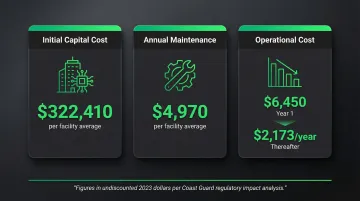
These figures add up quickly. Facilities that start planning now can spread procurement across multiple budget cycles rather than absorbing the full cost in a single year.
Research TSA-Certified Readers and PACS Integration
Facilities should begin vendor conversations early. The Coast Guard recommends integrating electronic TWIC inspection into existing Physical Access Control Systems rather than purchasing standalone readers for every gate.
When a facility registers a worker's TWIC and biometric template into a central PACS database, that worker can use a standard facility proximity card for daily access — provided the PACS performs the required validity and revocation checks.
Layer Biometric Access Control for Enhanced Security
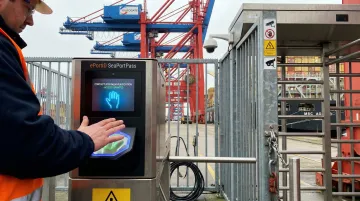
Facilities can use this period to invest in broader biometric access control infrastructure that complements TWIC compliance. For example, contactless palm vein biometric systems like those offered by ePortID provide an additional layer of identity verification at facility access points.
Why palm vein biometrics?
- Creates an indisputable record of who entered secure areas
- Eliminates proxy access and buddy-punching
- Verifies the person, not just the plastic credential they hold
- Integrates with existing access control systems via Wiegand or OSDP protocols
- Delivers 99.99991% accuracy with verification completed in under 2 seconds
For high-throughput port and industrial environments, speed and accuracy both matter. ePortID's SeaPortPass solution integrates real-time TWIC validation against the TSA Canceled Card List alongside contactless palm vein verification — a multi-factor approach that satisfies regulatory requirements while closing the identity gaps that credential-only systems leave open.
Frequently Asked Questions
How much does a TWIC card cost?
The current TSA enrollment fee is $124.00 for new applicants or in-person renewals, with online renewal available for $116.00. Reduced fees of $93.00 apply for applicants with a valid Hazmat Endorsement or FAST credential. The fee covers background check processing and card issuance.
How do you get a Transportation Worker Identification Credential (TWIC)?
Applicants visit a TSA enrollment center in person to submit biographic information, provide fingerprints, and undergo a security threat assessment. Cards are mailed once approved, with processing taking up to 60 days — TSA recommends applying at least 60 days before the credential is needed.
How fast can you get a TWIC?
TSA's processing goal is 60 days, though high demand can extend timelines. There is no standard expedited service, so applicants should plan ahead and submit applications well before the credential is needed.
What will disqualify you from a TWIC card?
Certain criminal convictions result in permanent or interim disqualification, including terrorism-related offenses, espionage, murder, extortion, unlawful weapon possession, and specific drug crimes. Disqualified applicants may seek a waiver or appeal through procedures established in 49 CFR Part 1515.
Does TSA recognize a TWIC card as a valid form of identification?
No. A TWIC card is not REAL ID-compliant and is not accepted as a primary ID for domestic air travel. It is designed specifically for maritime and port security access control. Active TWIC cardholders may be eligible for TSA PreCheck, but the card itself does not serve as general identification.
Is it allowed to punch a hole in the TWIC card to hang it on a lanyard?
No. Punching a hole damages the embedded microchip and antenna, causing the card to fail on electronic readers. Altered cards are unusable for biometric verification and require a $60 replacement — use card holders or badge clips instead.