How accurate is a palm vein scan?
Palm vein scanning is accurate to 99.99991%, making it the most precise biometric technology available. Unlike fingerprints or facial recognition, palm vein patterns are derived from 5 million unique data points located beneath the skin, invisible to the naked eye. This internal biometric cannot be duplicated, forged, or altered—even identical twins have different vein patterns. The technology also performs liveness detection during each scan, confirming blood flow to prevent spoofing attempts with photos or replicas.
What is the purpose of a palm vein scan?
Palm vein scanning serves as the most secure method of identity verification for access control, time and attendance, and data security applications. Organizations use it to eliminate credential fraud (buddy punching, shared badges, stolen cards), ensure only authorized personnel access restricted areas or sensitive data, maintain accurate audit trails, and comply with regulatory requirements. Common applications include critical infrastructure security, healthcare patient identification, financial data access, employee time tracking, and physical access control for buildings, server rooms, laboratories, and seaports.
Yes, palm vein scanning is completely safe and non-invasive. The technology uses near-infrared light to detect the hemoglobin in your blood, creating an image of your vein pattern. This light wavelength is harmless—similar to what TV remotes use—and does not emit radiation or require skin contact. The scanning process is contactless, reducing hygiene concerns and disease transmission risks. Unlike some biometrics that store images, palm vein systems convert patterns to encrypted mathematical templates, protecting your privacy. Medical studies confirm no health risks from repeated scanning.
How quickly does the verification process work?
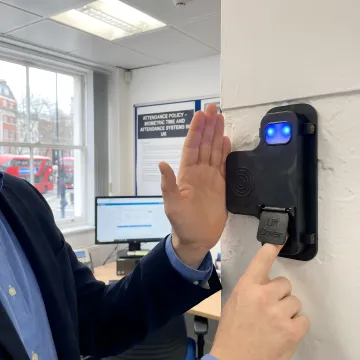
ePortID's palm vein scanners complete verification in under 2 seconds from presentation to access grant. Users simply hold their hand over the reader without touching any surface. The system captures the vein pattern, compares it to enrolled templates, performs liveness detection, and generates an access signal—all in real time. This speed prevents bottlenecks at entry points while maintaining maximum security. The contactless operation also means no delays from dirty fingerprints, gloves, or environmental conditions that affect other biometric technologies.
Can palm vein scanning integrate with our existing access control system?
Yes, ePortID solutions integrate seamlessly with virtually all existing access control systems through industry-standard Wiegand or OSDP (Open Supervised Device Protocol) interfaces. Our readers can power electric strikes, mag-locks, turnstiles, gates, and vehicle barriers directly or send signals to your current access control panel. For time and attendance applications, we integrate with major payroll systems. For data security, our DAM solution works as a standalone system requiring no core integration, or can connect across locations via secure VPN for centralized management.
What happens if someone's palm changes due to injury or aging?
Palm vein patterns remain stable throughout adult life and are not affected by normal aging, weight changes, or minor injuries. The vein structure beneath the skin is established by early childhood and does not significantly change. Surface-level cuts, burns, or calluses don't impact the internal vein pattern. In rare cases of major hand trauma affecting blood flow patterns, users can simply re-enroll using their other hand. The system allows enrollment of both hands for redundancy. Medical conditions affecting circulation may require alternative authentication methods.
How does your system prevent unauthorized access after an employee leaves?
Administrators can instantly deactivate a user's biometric credentials from the central management system the moment employment ends—there's no physical card to retrieve or worry about copies. The system generates real-time alerts when deactivated users attempt access, providing immediate notification of potential security incidents. Complete audit trails record all access attempts with timestamps, creating an indisputable record. For contractors and vendors, you can set time-bound, location-specific permissions that automatically expire, eliminating the need for manual deactivation and preventing forgotten access rights.
What is the total cost of ownership compared to card-based systems?
While initial equipment costs are higher than card readers, ePortID systems typically deliver ROI within 3-6 months through eliminated expenses. You save on card printing, replacement for lost/damaged cards, administrative time managing credentials, and password reset support. More significantly, eliminating buddy punching and time theft alone can recover 2-5% of payroll costs. Reduced security breaches, compliance violations, and insurance premiums add further savings. Unlike cards requiring constant replenishment, biometric credentials never need replacement. Operating expense pricing models are available to avoid capital investment.