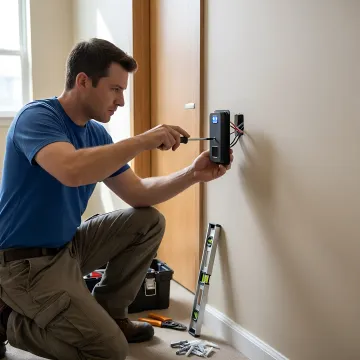
How much does it cost to install access control system?
Biometric access control installation costs vary based on the number of access points, integration complexity, and whether you need a networked multi-site deployment or a specialized application. A typical single-door installation with a palm vein scanner, controller interface, and configuration ranges from $1,500 to $3,500. Most systems pay for themselves within 3 to 6 months through eliminated time theft, reduced payroll processing costs, and prevention of unauthorized access incidents. ePortID also offers flexible pricing models that treat the system as an operating expense rather than a capital investment, and provides a detailed ROI analysis during the assessment phase.
What is biometric access control installation?
Biometric installation is the process of deploying hardware and software that uses unique physical characteristics—such as palm vein patterns, fingerprints, or facial features—to verify identity and control access to a facility or system. A professional biometric access control installer like ePortID handles everything from mounting contactless scanners at doors, turnstiles, or gates to integrating them with existing controllers via Wiegand or OSDP protocols, configuring user enrollment, and setting up real-time audit trails. The result is a secure, touchless access system that verifies identity in under 2 seconds with 99.99991% accuracy, eliminating the vulnerabilities of cards, PINs, and passwords.
How accurate is palm vein biometric technology?
Palm vein biometric technology delivers a 99.99991% accuracy rate with virtually zero false accepts. The system uses near-infrared light to read the unique vein pattern inside your palm, creating an identity template from over 5 million data points—a pattern so unique that even identical twins don't share it. Because it scans internal vein structure, accuracy is unaffected by cuts, dirt, or skin surface changes. The system also checks for liveness during each scan to prevent spoofing with photos or artificial hands, and verification completes in under 2 seconds.
Can biometric systems integrate with existing access control infrastructure?
Yes. ePortID's biometric scanners integrate seamlessly with virtually all existing access control systems through standard Wiegand or OSDP protocols. The palm vein reader acts as a credential reader that sends signals to your current door controllers, electric strikes, mag-locks, turnstiles, or gate systems—so there's no need to replace your entire infrastructure. The system can be configured for standalone operation, networked across multiple locations for centralized management, or set up as a hybrid requiring both biometric verification and existing card or PIN systems for multi-factor security. Integration typically takes one to two days per location depending on system complexity.
What industries does ePortID serve with biometric access control?
ePortID serves a wide range of industries, including critical infrastructure (power stations, refineries, military bases, and transportation hubs), corporate offices, data centers, healthcare facilities, educational campuses, manufacturing and industrial facilities, seaports, and warehouses. The company has 20 years of experience securing US Navy, Army Joint Task Forces, Marine Corps installations, and Port Authorities, and its enterprise clients include organizations such as Fiserv, Dow Chemical, Tata Steel, and South Jersey Port Corp.
What happens if the biometric system loses power or experiences a failure?
ePortID's systems include multiple failsafe mechanisms to ensure continuous operation. Most installations incorporate battery backup that maintains operation during power outages, and mechanical override options can be configured for emergency egress compliance. Enrollment data is stored locally on secure controllers so that network failures don't prevent access verification. For mission-critical applications, redundant scanner installations are recommended, and the system can be configured to either fail-secure (remain locked) or fail-safe (allow exit) based on your security requirements and local fire codes. All system events are logged even during failures to maintain complete audit trails.
Are ePortID's biometric systems compliant with privacy regulations like GDPR and BIPA?
Yes. ePortID's biometric systems are designed for compliance with regulations including GDPR, BIPA, and CCPA. The palm vein scanner captures only the vein pattern—not an image of your hand—and converts it into an encrypted mathematical template that cannot be reverse-engineered or used to recreate the original biometric. Templates are stored locally on secure controllers rather than in centralized databases vulnerable to breaches. The system includes clear consent processes, user data control, and complete audit trails showing who accessed what data and when. ePortID provides documentation and configuration support to help meet your specific regulatory requirements.
How does palm vein biometric technology prevent tailgating and credential sharing?
Unlike cards, PINs, or passwords that can be lost, shared, or stolen, palm vein biometric authentication verifies the unique internal vein pattern of the individual physically present at the scanner—a credential that cannot be handed off or replicated. The system's liveness detection ensures a real hand is being scanned, not a photo or artificial substitute. Physical access control installations also support two or three-part authentication and deliver real-time alerts, enabling security teams to detect and respond to tailgating attempts immediately. Every entry, exit, and denied attempt is logged in a complete audit trail for accountability.