How does palm vein biometric technology work?
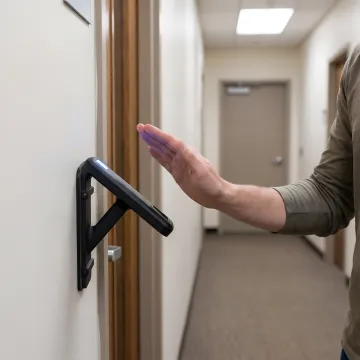
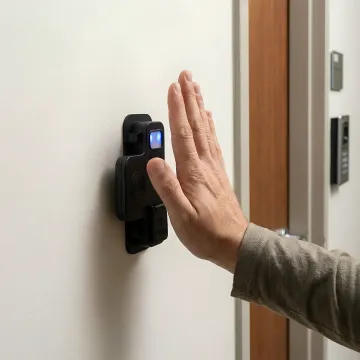
Palm vein biometric scanning uses near-infrared light to capture the unique vein pattern beneath your skin. Your hemoglobin absorbs this light, creating a distinctive map of 5 million data points. This pattern is completely unique to you—not shared even by identical twins—and remains stable throughout your lifetime. During verification, you simply hold your hand over the contactless reader, which takes under 2 seconds to match your pattern with 99.99991% accuracy. The system also checks for liveness, meaning it cannot be fooled by photographs, fake hands, or other spoofing attempts.
Can biometric access control systems integrate with our existing security infrastructure?
Yes, ePortID systems are designed for seamless integration with existing access control infrastructure. Our readers interface via industry-standard Wiegand or OSDP protocols, allowing them to work with virtually any gate controller, turnstile, door strike, or mag-lock system you currently have. Installation is straightforward—units attach directly to doors, gates, or turnstiles without requiring replacement of your core access control hardware. For data access management, our scanner mouse solution requires no integration with core IT systems and works as a standalone authentication device for single sign-on applications.
What happens if the biometric system fails to recognize an authorized user?
With 99.99991% accuracy, false rejections are extremely rare—less than one in a million scans. However, our systems offer flexible multi-factor authentication options to ensure operational continuity. You can configure two-part authentication (biometric plus RFID card) or three-part authentication (biometric plus card plus PIN code) as backup verification methods. Additionally, administrators can establish override protocols and receive real-time alerts for any verification issues. The system maintains detailed logs of all access attempts, including any technical anomalies, allowing security teams to investigate and resolve issues quickly while maintaining facility access.
How secure is biometric data stored in the system?
Biometric data security is built into our architecture at every level. Your palm vein pattern is converted into an encrypted mathematical template—not a photograph—that cannot be reverse-engineered to recreate your actual vein pattern. Templates are stored with encryption equivalent to 37 septillion years of cracking time using conventional methods. The contactless scanning process means your biometric data cannot be lifted from surfaces like fingerprints can. Data transmission between readers and controllers uses secure protocols, and our systems can operate on isolated networks or VPNs with static IP restrictions for enhanced security. For data access management, credentials are stored within your biometric template itself, eliminating centralized password databases that could be compromised.
What is the cost of implementing a biometric access control system?
Implementation costs vary based on your facility size, number of access points, and integration requirements. However, most organizations achieve ROI within 3-6 months through elimination of time theft, reduced payroll processing expenses, and prevention of security breaches. For time and attendance applications alone, eliminating buddy punching typically saves 2-5% of total payroll costs annually. We offer flexible pricing models including operating expense options that don't require large capital investments. Contact us for a facility assessment and customized quote—we'll demonstrate exactly how the system pays for itself while providing security benefits that traditional card-based systems simply cannot match.
Can contractors, vendors, and temporary workers use the biometric system?
Absolutely. The enrollment process takes just seconds and can be completed on-site as contractors or vendors arrive. Our systems allow administrators to create time-bound, location-specific permissions for temporary users—access automatically expires after the designated period without manual intervention. For recurring vendors, you can maintain their biometric credentials with flexible scheduling that activates only during their service windows. This eliminates the security risks of distributing and recovering physical access cards or sharing PIN codes, while providing complete visibility into when and where contractors accessed your facilities. Emergency mustering and audit trail features work identically for temporary users as they do for permanent staff.
How hygienic are biometric scanners in shared environments?
ePortID's palm vein scanning is completely contactless—users never touch the scanner surface. You simply hold your hand above the reader from a distance of a few inches, making it ideal for healthcare facilities, food service environments, and any shared-access situation where hygiene is paramount. This contactless operation became especially valued during health concerns, as it eliminates the disease transmission vectors associated with fingerprint scanners, keypads, or door handles. The technology works reliably in all weather conditions and doesn't degrade from repeated use like contact-based biometric systems. There's no surface to clean, no sensor windows to maintain, and no hygiene protocols beyond normal facility practices.
What happens during a power outage or network failure?
System resilience depends on your specific configuration and facility requirements. For critical access points, we can implement backup power solutions including UPS systems or fail-safe/fail-secure configurations based on your security protocols. Many installations use local authentication with periodic synchronization rather than constant network connectivity, allowing the system to continue operating during network interruptions. Access decisions are made at the reader level using locally stored encrypted templates, so brief network disruptions don't affect entry/exit operations. For life safety considerations, we configure systems to comply with fire codes and emergency egress requirements. We'll work with you during design to ensure your specific operational continuity and safety requirements are met.