Introduction
Traditional access credentials create vulnerabilities that high-stakes facilities can't afford. Keys, keycards, and PINs can be lost, stolen, shared, or duplicated—and in environments like data centers, ports, hospitals, and refineries, that security gap is unacceptable. IBM's Cost of a Data Breach Report consistently places the average breach cost above $4 million—and in regulated industries, a single compromised credential is often all it takes to get there.
Biometric security systems address this directly. By authenticating based on unique physiological traits—fingerprints, facial features, iris patterns, or palm vein structures—they tie access to identity itself. Every entry event becomes a verified, time-stamped record that credentials alone can't produce.
This guide walks you through the main biometric modalities available today, what each costs per door, what drives total system price beyond hardware, and how to evaluate ROI. Whether you're locking down a single server room or a multi-site industrial operation, you'll finish with a clear framework for choosing and budgeting a system that fits the job.
Key Takeaways
- Fingerprint scanners cost $200–$1,500 per door and work well for offices and warehouses, but contact requirements and spoofing risks limit their use in critical environments
- Facial recognition and iris scanning range from $1,000–$3,000 per door, offering touchless operation and higher accuracy
- Palm vein scanning delivers the highest accuracy (99.99991%) with contactless, liveness-checking operation — purpose-built for critical infrastructure and healthcare
- Installation, software licensing, compliance, and maintenance add 20–40% to quoted hardware costs
- Most systems pay back in 2–4 years; biometric time-and-attendance deployments targeting payroll fraud often hit ROI in 3–6 months
What Is a Biometric Security System?
A biometric security system grants or denies access based on who you are — not what you carry or remember. Unlike keycards (possession-based) or PINs (knowledge-based), biometric traits can't be forgotten at home, lent to a coworker, or stolen in a data breach.
That direct link between identity and access is what makes biometrics different. When a palm vein pattern or iris scan is required, only the enrolled individual can gain entry — eliminating credential sharing and buddy punching while generating audit trails that hold up under regulatory scrutiny.
What You're Actually Buying
A complete biometric security system includes several interconnected components:
- Biometric readers/scanners that capture and verify physiological traits
- Electronic door hardware such as electric strikes, magnetic locks, or turnstile controllers
- Central management platform (cloud-based or on-premise) for enrollment, access rule configuration, audit logs, and reporting
- Enrollment and database infrastructure that securely stores encrypted biometric templates and manages user permissions across multiple sites
The scanner is just one piece of the investment — hardware, software, and installation each carry their own costs. Knowing what's in the stack upfront prevents the surprise line items that derail biometric deployments.
Biometric Technology Types: Features and Pricing Comparison
When evaluating biometric modalities, use these criteria to compare options:
- Accuracy metrics: False acceptance rate (FAR) and false rejection rate (FRR)
- Contact vs. contactless operation: Hygiene, user comfort, and durability implications
- Liveness detection capability: Resistance to spoofing with replicas or photos
- Per-door hardware cost: Upfront investment per access point
- Ideal use cases: Facility types where each modality performs best
Higher upfront cost often reflects stronger accuracy, better spoofing resistance, and lower long-term operational risk.
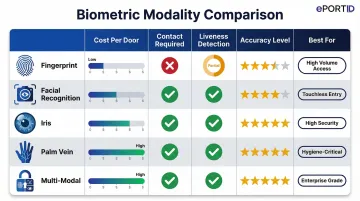
The table below summarizes all five modalities at a glance. Detailed breakdowns follow.
| Modality | Cost Per Door | Contact Required | Liveness Detection | Best For |
|---|---|---|---|---|
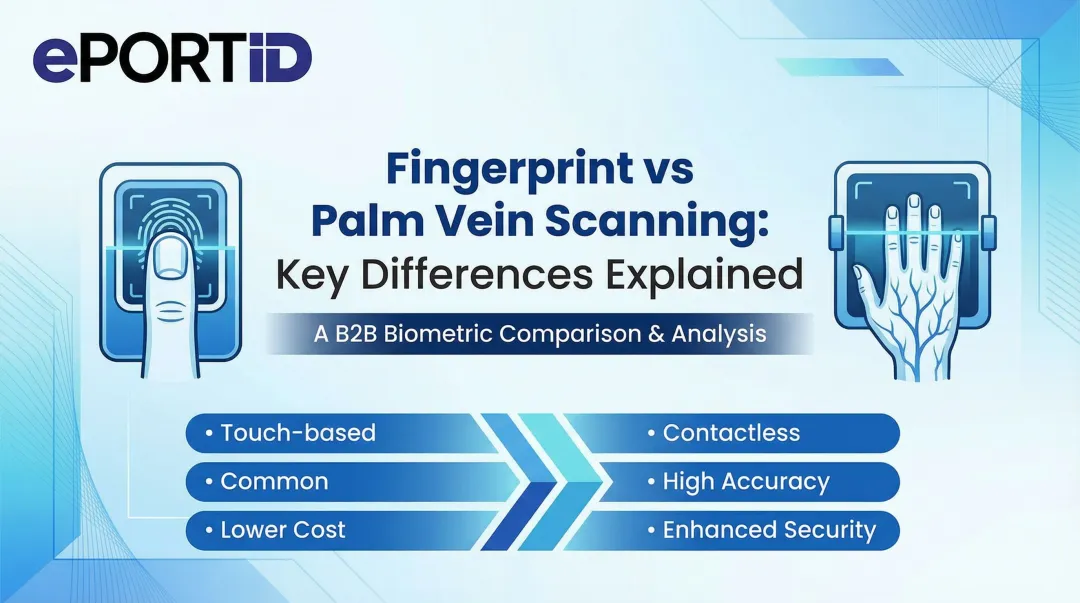
| Fingerprint | $200–$1,500 | Yes | Limited (depends on sensor) | Offices, warehouses, budget deployments |
| Facial Recognition | $1,000–$2,500 | No | Yes (3D/IR systems) | Lobbies, campuses, high-throughput entry |
| Iris | $1,500–$3,000 | No | Yes | Data centers, government, pharma labs |
| Palm Vein | $1,000–$2,500 | No | Yes (blood flow detection) | Healthcare, critical infrastructure, finance |
| Multi-Modal | $2,500–$5,000+ | Varies | Yes | Military, nuclear, financial vaults |
Fingerprint Scanners
Fingerprint scanners capture the unique ridge patterns on fingertips using optical, capacitive, or ultrasonic sensors. They're the most widely deployed biometric technology due to decades of refinement and broad vendor availability.
Per-door hardware cost: $200–$1,500 installed, depending on sensor quality and housing durability.
Advantages:
- Lowest cost entry point for biometric access control
- Widely available from dozens of manufacturers
- Familiar to users—most people have enrolled fingerprints for smartphones or government IDs
- Compact form factor fits standard door frames easily
Limitations:
- Contact requirement creates hygiene concerns in healthcare or food processing environments
- Environmental sensitivity: Dirt, moisture, cuts, or worn fingerprints degrade read accuracy
- Spoofing vulnerability: Older optical sensors can be fooled by high-resolution fingerprint replicas or lifted prints
- Not ideal for outdoor gates exposed to weather extremes
Best suited for: General office buildings, warehouses, small business access control, and budget-conscious deployments where hygiene and spoofing resistance are not primary concerns.
Facial Recognition Systems
Facial recognition systems use cameras and algorithms to map facial geometry, identifying individuals based on features like eye spacing, nose shape, and jawline contours. Modern systems use 3D depth sensors and infrared cameras to improve accuracy and liveness detection.
Per-door hardware cost: $1,000–$2,500 per access point, including camera, processing unit, and integration hardware.
Advantages:
- Fully touchless operation—no contact required
- Fast throughput in high-traffic areas like building lobbies
- Can authenticate while users are moving, improving user experience
- Scales well for environments with hundreds of daily entries
Limitations:
- Lighting dependency: Performance degrades in low light or harsh backlighting
- Mask and obstruction issues: Accuracy drops when faces are partially covered
- Demographic bias risks: Some systems show lower accuracy for certain age groups or skin tones
- Privacy concerns and regulatory scrutiny in some jurisdictions
Best suited for: Building lobbies, retail environments, educational campuses, and high-throughput entry points where touchless convenience matters.
Iris Scanners
Iris recognition analyzes the unique patterns in the colored ring around the pupil. The iris is one of the most stable biometric traits—it doesn't change with age, injury, or most medical conditions.
Per-door hardware cost: $1,500–$3,000 per door, reflecting the precision optics and processing required.
Advantages:
- Very high accuracy with extremely low false acceptance rates
- Stable biometric trait—doesn't degrade over time
- Difficult to spoof—requires live eye with visible blood vessels
- Works reliably across diverse populations
Limitations:
- Higher hardware cost than fingerprint or facial recognition
- Requires user cooperation and precise positioning
- Glasses, contact lenses, or eye conditions can sometimes interfere with reads
- Slower enrollment process compared to other modalities
Best suited for: Data centers, pharmaceutical labs, government facilities, and environments where maximum accuracy justifies the higher cost.
Palm Vein Scanning
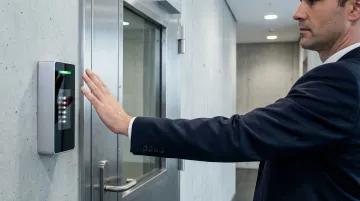
Palm vein scanning uses near-infrared light to map the unique vein pattern beneath the skin surface. This internal biometric trait is derived from millions of data points, creating a pattern unique even between identical twins. Because veins are internal, they cannot be lifted from a surface, photographed, or replicated.
Per-door hardware cost: $1,000–$2,500 per access point, depending on integration complexity and volume discounts.
How it works: The scanner emits low-intensity infrared light—comparable to a TV remote—that penetrates the skin. Deoxygenated hemoglobin (the oxygen-depleted blood in veins) absorbs this light, creating a detailed vein map.
During verification, the system captures 5 million data points and converts them into an encrypted template. Blood flow detection confirms liveness, preventing spoofing attempts with fake hands or photos.
Advantages:
- Achieves 99.99991% accuracy—higher than most fingerprint and facial systems (ePortID/Fujitsu)
- Fully contactless: users hold their hand over the reader without touching anything
- Vein patterns are internal—they can't be copied, photographed, or stolen
- Blood flow detection confirms liveness, blocking spoofing with replicas or 3D models
- Verifies identity in under 2 seconds
- Reads reliably regardless of skin moisture, dirt, or surface abrasions
Limitations:
- Higher upfront cost than fingerprint scanners
- Smaller vendor ecosystem compared to fingerprint technology
- Requires user cooperation to position hand correctly
Best suited for: Critical infrastructure (ports, refineries, power stations), healthcare facilities, data centers, pharmaceutical labs, and financial institutions—anywhere hygiene, spoofing resistance, or maximum accuracy is non-negotiable. ePortID, in partnership with Fujitsu, has deployed palm vein systems for clients including Dow Chemical, Tata Steel, and Thyssen Krupp.
Multi-Modal Biometrics
Multi-modal systems combine two or more authentication factors—such as palm vein + PIN, fingerprint + facial recognition, or iris + RFID card. This layered approach creates redundancy and significantly reduces the probability of unauthorized access.
Per-door hardware cost: $2,500–$5,000+ per access point, depending on the specific combination and integration complexity.
How it works: Users must successfully authenticate using multiple methods sequentially. For example, an employee might scan their palm vein and enter a PIN, or present an RFID badge and verify their iris. Access is granted only when all factors clear.
Advantages:
- Extremely low false acceptance rates—approaching zero
- Eliminates single points of failure
- Customizable security levels for different zones within the same facility
- Strong compliance with regulations requiring multi-factor authentication
Limitations:
- Highest cost per door
- More complex user experience (multiple steps)
- Higher maintenance requirements with more hardware components
- Longer transaction times
Best suited for: Military installations, nuclear facilities, financial vaults, and research laboratories handling classified materials—environments where the financial or security cost of a single breach far exceeds the system price.
What Drives the Total Cost of a Biometric Security System?
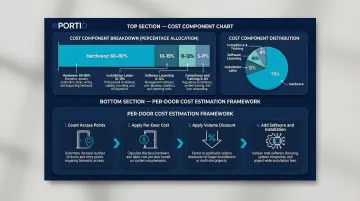
Hardware accounts for only 60–80% of total system cost. Understanding the additional cost drivers helps you budget accurately and avoid sticker shock during deployment.
Number of Access Points and Scale
Per-door costs dominate your budget. A 10-door office deployment at $1,500 per door costs $15,000 in hardware alone. A 100-door facility at the same per-door price reaches $150,000—but at this scale, volume discounts often reduce per-door cost by 20–40%.
Each additional door adds:
- Biometric scanner hardware
- Door control electronics (strikes, mag-locks, or turnstile controllers)
- Installation labor
- Software licensing (if priced per-door or per-connection)
- Ongoing maintenance and support
Estimation framework: Start by counting all physical access points requiring control—exterior doors, interior restricted zones, vehicle gates, turnstiles, and elevator access. Multiply by your chosen per-door cost, then apply volume discounts for deployments over 50 doors.
Installation Complexity and Building Infrastructure
Professional installation typically ranges from $500–$2,500 per door, depending on facility complexity. Modern buildings with existing network cabling and nearby power fall on the low end; older buildings needing new conduit, electrical work, or retrofit hardware push toward the high end.
Factors that increase installation cost:
- Distance from network closets to door locations
- Need for new electrical drops or conduit runs
- Structural modifications to accommodate hardware
- Integration with existing mechanical locks or access systems
- Outdoor installations requiring weatherproof housings
Improper installation creates security vulnerabilities and voids manufacturer warranties. For critical deployments, professional installation by certified integrators is essential—not optional.
Software, Cloud Management, and Integration
Managing enrollments, access rules, audit logs, and system health all require software—either cloud-based SaaS or an on-premise perpetual license.
Cloud-based SaaS platforms typically run $3.50–$30+ per door, per month, tiered by features:
- Basic ($3.50–$10/door/month): credential management and scheduling
- Mid-tier ($10–$20/door/month): mobile credentials and directory synchronization
- Enterprise ($20–$30+/door/month): advanced analytics, API integrations, and multi-site administration
According to Safe and Sound Security, cloud-based systems often cost 20–30% less over five years compared to on-premise deployments due to reduced IT infrastructure and maintenance overhead.
On-premise perpetual licenses: Require upfront licenses of $1,000–$3,000, plus annual maintenance agreements of $500–$1,500 (or 15–25% of license cost). Over five years, on-premise software can cost $8,000–$12,000 per door when infrastructure, IT labor, and maintenance are included.
Connecting biometric access control with existing surveillance cameras, alarm systems, or HR/payroll platforms adds professional services cost—typically $5,000–$25,000 depending on complexity.
That investment carries clear operational returns. Automated time-and-attendance logging, for instance, reduces payroll processing overhead and eliminates manual data entry errors.
Compliance and Data Privacy Obligations
Organizations collecting biometric data face legal obligations under state privacy laws. Illinois' Biometric Information Privacy Act (BIPA), California's Consumer Privacy Rights Act (CPRA), and similar laws in over 20 states require written consent, data retention policies, and security safeguards.
These compliance requirements carry real cost:
- Legal review of consent forms and data handling policies
- Employee training on data privacy requirements
- Audit documentation and reporting infrastructure
- Data security assessments and encryption standards
A single BIPA violation in Illinois carries statutory damages of $1,000–$5,000 per affected individual. For a 500-employee facility, improper biometric data handling could mean millions in liability—a far steeper cost than the compliance work itself.
The Full Price Tag: Hidden and Ongoing Costs to Budget For
Staff Enrollment and Training
Enrolling employees into the biometric database is often overlooked in vendor quotes. For organizations with hundreds of employees, this represents meaningful IT or HR effort.
Enrollment time varies by modality:
- Palm vein: 15 seconds per hand (30 seconds total for redundancy)
- Facial recognition: 15–30 seconds
- Fingerprint: 30–60 seconds per person (enrolling multiple fingers)
- Iris: 60–90 seconds
For a 200-employee facility, enrollment alone requires 8–12 hours of staff time using palm vein technology, or 20+ hours with slower modalities.
Training for system administrators and daily users typically costs $500–$2,000 and covers enrollment procedures, access rule configuration, audit log interpretation, and troubleshooting. Most vendors deliver this training in one to two days, either on-site or remotely.
Maintenance, Software Updates, and Hardware Upkeep
Annual maintenance contracts typically run 12–18% of hardware cost and cover:
- Software security patches and feature updates
- Sensor calibration and cleaning
- Hardware component replacement (damaged readers, failed strikes)
- Technical support hotline access
Proactive maintenance cuts emergency repair costs. Quality biometric systems last 7–10 years with proper care, while neglected systems may fail in 3–5 years. For a $100,000 hardware investment, annual maintenance costs $12,000–$18,000—but this prevents downtime that could cost far more in lost productivity or security incidents.
Monitoring and Incident Response
Biometric access control generates logs and alerts that require human attention. Failed authentication attempts, unusual access patterns, or hardware malfunctions need monitoring and response—whether by an in-house security team or a managed security provider.
Integrating access logs with surveillance footage lets security personnel immediately match an unauthorized access attempt to camera footage and escalate—an audit trail that regulated industries increasingly require for compliance.
Managed monitoring services typically cost $500–$3,000 monthly depending on facility size and response requirements. For facilities like data centers or port terminals where a single breach triggers regulatory review, that monthly cost is a fraction of the liability exposure.
Is a Biometric Security System Worth the Investment?
Security ROI: Eliminating Credential Vulnerabilities
Traditional credentials create ongoing costs and security risks. Replacing lost keycards, re-keying locks, and investigating insider access abuse add up quickly. A single keycard replacement costs $10–$25 in hardware and IT time. For a 500-employee organization with 20% annual turnover, that's $1,000–$2,500 annually just replacing credentials for departing staff.
The larger risk is unauthorized access. A single data breach costs organizations an average of $4.45 million according to IBM's 2023 Cost of a Data Breach Report. For critical infrastructure, theft of physical assets or sabotage can cost millions more. Against a $50,000–$150,000 biometric system investment, even a single prevented incident can return the full cost many times over.
Operational ROI: Payroll and Time Savings
Biometric time-and-attendance systems eliminate "buddy punching," where one employee clocks in for an absent coworker. This creates an indisputable record of who was present and when, reducing payroll fraud.
According to the American Payroll Association, buddy punching costs employers an estimated 2.2% of gross payroll annually. For an organization with $10 million in annual payroll, that's $220,000 in fraudulent time claims. A biometric time-and-attendance system paying $75,000 would pay for itself in under 5 months through eliminated payroll fraud alone, not counting reduced processing costs and improved productivity.
ePortID's clients in heavy industry—including Dow Chemical, Tata Steel, and Thyssen Krupp—have deployed palm vein systems that pay for themselves in 3–6 months through combined payroll savings and eliminated credential costs. This contrasts sharply with the 2–4 year ROI horizon commonly cited for less accurate systems that still allow some fraud to slip through.

Matching Technology to Risk Level
Once you understand your ROI potential, the next step is matching technology to your actual exposure. A small office accessing non-sensitive files has different needs than a pharmaceutical lab handling controlled substances or a seaport managing thousands of daily entries.
Risk-based deployment strategy:
- Low-risk zones (break rooms, general office areas): Fingerprint or basic RFID
- Medium-risk zones (IT closets, HR records): Facial recognition or palm vein
- High-risk zones (data centers, financial vaults, research labs): Palm vein or multi-modal
Deploy the right modality at each access point rather than applying a one-size-fits-all approach. This optimizes both security and budget.
Budget Frameworks by Organization Size
Small business (1–10 doors):
- Technology: Fingerprint or palm vein
- Software: Basic cloud management
- Integration: Standalone or simple HR sync
- Total investment: $5,000–$25,000
- Ongoing costs: $500–$2,000 annually
Mid-market (10–50 doors):
- Technology: Facial recognition or palm vein
- Software: Mid-tier cloud with centralized management
- Integration: HR/payroll integration, surveillance sync
- Total investment: $25,000–$150,000
- Ongoing costs: $3,000–$15,000 annually
Enterprise/critical infrastructure (50+ doors):
- Technology: Palm vein or multi-modal
- Software: Enterprise cloud or on-premise with full API access
- Integration: Complete CCTV, alarm, HR, and compliance infrastructure
- Total investment: $150,000–$500,000+
- Ongoing costs: $15,000–$50,000+ annually
These ranges include hardware, installation, software, initial enrollment, and first-year support. Actual costs vary based on facility complexity, integration requirements, and chosen modality.
Frequently Asked Questions
How much does a biometric security system cost?
A complete installed system ranges from $5,000 for a small business with fingerprint scanners on a few doors to $500,000+ for enterprise deployments with palm vein or multi-modal authentication across 100+ access points. Per-door costs span $200–$5,000 depending on modality, with ongoing costs adding 12–18% of hardware value annually for maintenance and software.
What is the average cost of a biometric scanner?
Entry-level biometric scanners start around $200–$500 per unit, while access-control-grade units run $200–$1,500 per door installed. Palm vein systems — the most accurate option available — sit at the higher end of that range but eliminate the false-acceptance risk that cheaper modalities carry.
How much does a key fob system cost?
Key fob and keycard systems cost $50–$300 per door upfront, but ongoing fob replacement, re-keying, and the risk of lost or shared credentials erode that savings — often making biometric systems more cost-effective by year 5.
What is a biometric entry system?
A biometric entry system grants or denies entry based on a person's unique physiological traits — fingerprint, face, iris, or palm vein pattern. Unlike keys or cards, biometric credentials are tied to the person — they can't be forgotten, duplicated, or handed off to someone else.
What is the most accurate biometric technology available?
Palm vein scanning is the most accurate biometric modality available. Systems like ePortID's achieve 99.99991% accuracy — the vein pattern is internal, unique even between identical twins, and confirmed by liveness detection that verifies active blood flow during every scan.
How long does it take for a biometric security system to pay for itself?
Most commercial systems recoup their investment within 2–4 years through reduced credential management costs. Organizations using biometric time-and-attendance to eliminate payroll fraud often see payback in 3–6 months.