Introduction
A single commercial building can have dozens of entry points and hundreds of authorized users — residents, employees, vendors, and delivery personnel — all moving through shared and restricted spaces daily. Managing who gets in where, and proving it after the fact, is one of the hardest operational problems property managers face. According to a 2023 report by the Security Industry Association, access control failures are among the top contributing factors to workplace security incidents in multi-occupancy facilities.
Traditional key-and-lock systems break down at this scale. Keys get copied, lost, or handed off without authorization. Permissions can't be tiered by tenant or role. And when something goes wrong, there's no audit trail to trace it.
This guide covers the top five access control solutions designed for multi-tenant buildings — evaluated on credential flexibility, scalability, audit capability, and integration with existing building infrastructure — plus the key questions to ask before committing to a system.
Key Takeaways
- Multi-tenant buildings need layered access control—distinct permission tiers for tenants, staff, and visitors across every entry point
- The five top solutions span biometric (ePortID), video intercom (ButterflyMX), cloud card/mobile (Brivo), wireless lock (SALTO), and mobile-first (Kisi)
- Biometric systems like ePortID offer credentials that cannot be lost, shared, or duplicated—ideal for buildings with compliance requirements
- Cloud-based systems allow remote, real-time access management across multiple buildings from a single dashboard
- The right system hinges on your building type, risk profile, scalability needs, and integration stack
Overview of Access Control in Multi-Tenant Buildings
Access control in multi-tenant buildings governs who can enter which part of a building, when, and through what credential. Coverage extends from main entrances and elevators to amenity spaces, server rooms, parking structures, and individual tenant suites.
The global access control market is projected to reach USD 17.30 billion by 2030, growing at approximately 8% annually — driven largely by property managers replacing legacy systems that can no longer meet modern security or compliance demands.
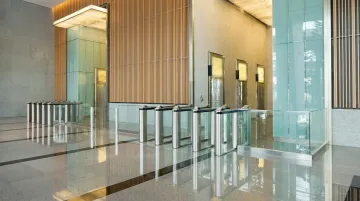
That demand has pushed the market well beyond card readers and PIN pads. Today's options include:
- Cloud-managed keypads for straightforward entry control
- AI-assisted video intercoms for remote identity verification
- Contactless biometric readers for high-security zones
The sections below evaluate the five best options across this spectrum for different building profiles.
Top 5 Access Control Solutions for Multi-Tenant Buildings
The five systems below were chosen based on security strength, scalability, ease of management, integration flexibility, and proven deployment in multi-tenant environments.
ePortID
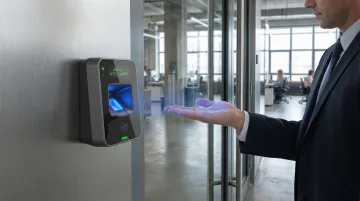
ePortID is a Philadelphia-based biometric security firm with 20 years of experience in access control for military, port authority, and critical infrastructure environments. That hardened expertise now extends to commercial and mixed-use multi-tenant buildings. Their core product is a contactless palm vein scanner that creates a unique identity from 5 million biometric points, accurate to 99.99991% in under 2 seconds.
For multi-tenant buildings requiring the highest security tier, ePortID's palm vein credential cannot be lost, stolen, shared, or duplicated — removing the entire risk category associated with key cards, fobs, and PINs. The system checks for liveness during every scan, preventing spoofing attempts.
It also creates an indisputable, time-stamped audit record of every entry event, supporting compliance in regulated environments such as financial institutions, data centers, research labs, and healthcare facilities within mixed-use buildings.
| Feature | Details |
|---|---|
| Authentication Method | Contactless palm vein biometric—identity derived from 5 million unique points; works even for identical twins |
| Accuracy & Speed | 99.99991% accurate; verification completes in under 2 seconds; no physical contact required |
| Best Fit | High-security commercial multi-tenant buildings: offices, financial institutions, research labs, data centers, healthcare facilities |
ButterflyMX
ButterflyMX is a cloud-based video intercom and access control platform deployed in over 20,000 buildings, designed primarily for residential multifamily and mixed-use properties where resident experience and visitor management are top priorities. The platform powers more than 1.5 million apartment units and has facilitated over 122.5 million door and gate openings across North America.
Its core advantage is resident-controlled visitor management: residents can see, speak with, and remotely grant access to visitors via smartphone, removing the need for in-unit intercoms or front desk staffing. The cloud dashboard integrates with leading property management software like Yardi, Entrata, and RealPage, and QR code-based visitor access simplifies entry for short-term guests.
| Feature | Details |
|---|---|
| Key Credential Types | Mobile app, key fob, PIN code, QR code for guests |
| Management Interface | Cloud dashboard with real-time audit logs, remote unlock, and property management software integrations |
| Best Fit | Residential multifamily, mixed-use, and student housing with high visitor and delivery traffic |
Brivo
Brivo is a cloud-based access control platform built for centralized management of doors, elevators, and gates across multi-site property portfolios. It's widely adopted by enterprise property management groups overseeing commercial office buildings and large residential complexes, with 70,000+ deployments covering over 300 million square feet globally.
Multi-building scalability is where Brivo earns its place: a single administrator can manage credentials and permissions across dozens of locations from one console. Its integration with Milestone Systems' XProtect VMS and mobile credentials including Apple Wallet make it a strong choice for portfolios where management consistency across properties matters.
Cumulus Media uses Brivo to manage over 300 locations from a single centralized dashboard — a practical example of the platform's enterprise range.
| Feature | Details |
|---|---|
| Scalability | Multi-site, multi-building management from a single cloud console; supports large enterprise portfolios |
| Integrations | Video management systems, mobile credentials, HR/identity platforms, property management software |
| Best Fit | Commercial office buildings and large residential portfolios with centralized security management needs |
SALTO Systems
SALTO Systems is a global access control manufacturer specializing in wireless smart lock technology, deployed across multi-tenant properties to control access at the suite, amenity room, or floor level without hardwired infrastructure. The company has over 20 years in the market and installations across more than 100 countries.
The practical case for SALTO in retrofit buildings is cost: industry experts note wireless locks can cut installation costs by up to 50% compared to fully wired solutions, particularly where running cable through existing walls is impractical. An offline mode ensures continuous operation during network outages, and mobile credential support lets residents and tenants use smartphones for unit-level entry.
| Feature | Details |
|---|---|
| Hardware Type | Wireless locksets with mobile, card, and keypad credential support; no wired infrastructure required |
| Resilience | Offline mode ensures access continuity during internet or network disruptions |
| Best Fit | Retrofit multi-tenant buildings needing unit-level and amenity access control without major cabling work |
Kisi
Kisi is a cloud-managed access control platform popular in tech-forward commercial office buildings, coworking spaces, and mid-size multifamily properties, known for its clean mobile-first interface and rapid deployment model. The platform has achieved high adoption in flex workspace environments.
What makes Kisi practical for mixed commercial buildings is tenant-level autonomy: individual companies can manage their own employee access without involving building administration. The platform supports smartphone and RFID card credentials, time-based access scheduling for vendors and contractors, and native integration with HR tools like Microsoft Entra ID and Okta through Single Sign-On and SCIM provisioning.
Gather uses Kisi to secure 55 doors across 7 locations for 2,800 members — a representative example of its coworking and multi-site fit.
| Feature | Details |
|---|---|
| Credential Options | Smartphone (iOS/Android), RFID card; time-based and role-based access scheduling for staff and vendors |
| Integrations | HR systems, workplace platforms, and property management tools; open API for custom integrations |
| Best Fit | Commercial office multi-tenant buildings and coworking environments with tech-savvy tenant companies |
How We Chose the Best Access Control Solutions
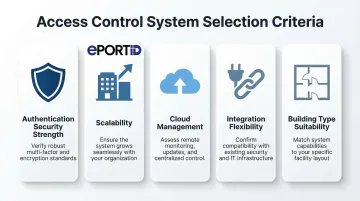
Systems were assessed on five criteria:
- Authentication security strength — biometric vs. card vs. PIN
- Scalability — handling hundreds of users across multiple entry points
- Cloud management — remote administration capability
- Integration flexibility — cameras, intercoms, and property management software
- Building type suitability — performance across different multi-tenant configurations
Access control failures are common—92% of security professionals experienced at least one in a six-month period, with tailgating (61%) and credential sharing (38%) as the leading causes. Yet the most common purchasing mistake is choosing based on upfront hardware cost alone.
That approach ignores credential management overhead, rekeying costs after tenant turnover, and liability exposure when a compromised credential grants unauthorized access. Systems with non-duplicable credentials—biometric or tightly managed mobile—cut that long-term operational risk significantly.
Budget Reality Check:
Per-door costs vary widely by technology:
- Keypad systems: $1,000–$2,500 per door
- Key fob/card systems: $1,500–$3,500 per door
- Mobile access systems: $2,000–$4,500 per door
- Advanced biometric systems: $3,500–$10,000+ per door
Total cost of ownership must factor in lock rekeying ($20–$150 per lock plus labor) and RFID card replacement ($5–$50 each) in high-turnover environments.
A well-chosen system pays for itself through fewer incidents, lower administrative overhead at move-in/move-out, and audit trails that hold up when liability questions arise — without requiring a full hardware overhaul as the property grows.
Conclusion
No single system is universally "best"—the right choice depends on the building's security risk profile, tenant mix, and management capacity. Biometric solutions like ePortID are the right call for high-security commercial environments where credential integrity is non-negotiable, while cloud-based intercom and card systems serve residential and mid-market properties well.
Evaluate scalability, vendor support depth, and integration compatibility before making a final decision. Look beyond brand recognition toward the system's ability to meet compliance requirements and reduce operational cost over time.
For multi-tenant buildings where unauthorized access carries serious operational or regulatory consequences, ePortID's contactless palm vein platform draws on 20 years of deployment experience with the US Navy, Army JTF, and major port authorities — then applies that rigor to commercial facilities. Clients like Fiserv, Dow Chemical, and Tata Steel have deployed the system where credential failure isn't an option. Contact ePortID at info@eportid.com or (215) 627-2651 to discuss your building's access requirements and get a site-specific recommendation.
Frequently Asked Questions
Frequently Asked Questions
What is the most secure type of access control for multi-tenant buildings?
Palm vein biometric systems represent the highest security tier because credentials cannot be copied, shared, or stolen—unlike key cards, fobs, or PINs. These systems also check for liveness during each scan, blocking spoofing attempts using photographs or molds. Palm vein scanning outperforms fingerprint readers in both accuracy and hygiene, requiring no surface contact.
How do you manage different access permissions for multiple tenants in the same building?
Modern cloud-based access control systems let administrators create role-based permission tiers (tenant, staff, vendor, visitor) and assign specific entry points and time windows to each role. Access can be revoked or modified instantly through a centralized dashboard—no physical hardware changes required.
What are the biggest security vulnerabilities in multi-tenant buildings?
The top vulnerabilities are tailgating (61% of buildings), where unauthorized persons follow credentialed users through doors; credential sharing or duplication (38%), especially with physical keys or PIN codes; and lack of audit visibility. Electronic and biometric systems address all three.
How much does an access control system cost for a multi-tenant building?
Costs vary widely by technology type and number of entry points. Basic electronic keypad systems start at $1,000–$2,500 per door, while advanced biometric systems range from $3,500–$10,000+ per door. Total cost of ownership should include rekeying ($20–$150 per lock), credential replacement, and incident response—often favoring higher-upfront systems.
Can access control systems integrate with existing security cameras and intercoms?
Most modern cloud-based platforms (Brivo, ButterflyMX, Kisi) offer native or API-based integration with IP cameras and intercom systems, enabling linked audit logs that pair entry events with video footage for investigation purposes and real-time monitoring.
What is contactless biometric access control and how does it work in a multi-tenant building?
Contactless palm vein systems authenticate users by reading unique vascular patterns beneath the skin—no surface contact with the reader needed. Each user enrolls once, then accesses permitted areas throughout the building by simply presenting their hand. The system verifies liveness at every scan, preventing spoofing with photos or physical molds.