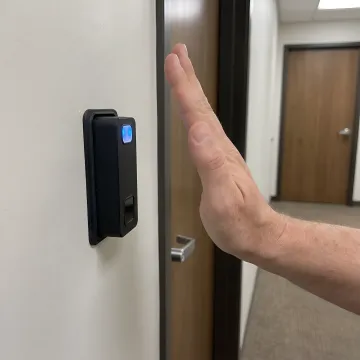
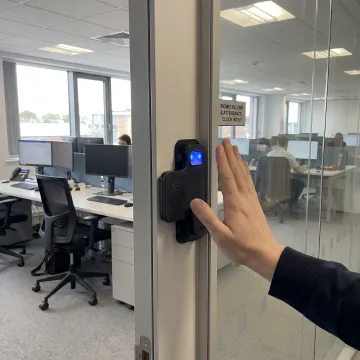
How does palm vein biometric scanning work?
Palm vein scanning uses near-infrared light to capture the unique vein pattern beneath your palm's skin. This pattern is created from 5 million data points and is completely unique to you—even identical twins have different vein patterns. The scanner captures this pattern, converts it to an encrypted template, and verifies it in under 2 seconds. Because the veins are internal, they cannot be photographed, replicated, or stolen like fingerprints or facial features. The system also checks for blood flow (liveness detection) during each scan to prevent spoofing attempts.
Can biometric access control integrate with our existing security system?
Yes, our ePortPass system is designed for seamless integration with existing access control infrastructure. It interfaces via industry-standard Wiegand or OSDP protocols, allowing it to communicate with your current gate controllers, turnstiles, door strikes, and mag-locks. Installation is straightforward—units attach to doors, gates, or vehicle entry points without requiring a complete system overhaul. You can implement biometric verification as standalone authentication or add it as an additional layer to your existing card-based system for multi-factor security.
What happens if the biometric scanner fails to recognize an authorized user?
Our palm vein scanning technology boasts 99.99991% accuracy, meaning false rejections are extremely rare. If a scan doesn't register, users simply rescan—the process takes under 2 seconds. The system can be configured for multi-factor authentication, allowing authorized users to present a backup credential (card or PIN) if needed. System administrators receive real-time alerts for any access anomalies and can remotely grant temporary access if legitimate issues arise. The audit trail captures all access attempts, providing complete visibility into entry patterns and potential system issues.
Is palm vein scanning sanitary for high-traffic areas?
Absolutely. Palm vein scanning is completely contactless—users simply hold their hand 2-4 inches above the scanner without touching any surface. This eliminates hygiene concerns associated with fingerprint readers or shared keypads, making it ideal for healthcare facilities, food service areas, schools, and any high-traffic environment. There's no surface to clean between users, and the technology works through thin gloves if required for sterile environments. This contactless operation also extends the lifespan of the hardware since there's no physical wear from repeated touching.
How secure is biometric data stored in your system?
Your palm vein pattern is never stored as an image—only as an encrypted mathematical template that cannot be reverse-engineered into the original pattern. This template is secured using military-grade encryption and stored in protected databases with restricted access controls. The system cannot recreate your actual vein pattern from the stored data, making it useless to potential hackers. Additionally, biometric templates are never transmitted over networks in readable form. Our systems comply with data protection regulations and can be configured for on-premise storage to meet specific security or compliance requirements.
What is the typical installation timeline for a biometric access control system?
Installation timelines vary based on facility size and complexity, but most deployments are remarkably quick. Single-door installations can be completed in under 2 hours. A typical 10-door corporate office might take 2-3 days, including user enrollment and testing. Larger facilities with 50+ access points generally require 1-2 weeks. The hardware attaches to existing infrastructure with minimal modifications—no extensive wiring or construction required. User enrollment is efficient, taking about 30 seconds per person. We provide comprehensive training for administrators and can conduct phased rollouts to minimize operational disruption during the transition.
Can the system track who enters and exits specific areas?
Yes, the system maintains a complete audit trail of all access events. You can track exactly who entered which areas, when they arrived, when they departed, and how long they remained. This creates indisputable records for compliance, security investigations, or time-and-attendance verification. Real-time alerts notify administrators of denied access attempts, unusual entry patterns, or former employees attempting access after termination. Reports can be generated by individual, location, time period, or access level. For high-security areas, the system can also track tailgating attempts and alert security personnel to potential unauthorized entry.
What ongoing maintenance does a biometric access control system require?
Palm vein scanners require minimal maintenance due to their contactless design—there are no surfaces to wear out or clean regularly. Routine maintenance involves periodic software updates (which we manage remotely), checking network connectivity, and verifying scanner alignment if units are in harsh environments. The system automatically monitors scanner health and alerts administrators to any performance issues. User database maintenance includes adding new employees, removing terminated staff, and updating access permissions as roles change. Most clients find maintenance requirements significantly lower than traditional card-based systems, which require card replacements, lock cylinder changes, and constant management of lost credentials.