How much does building access control systems cost?
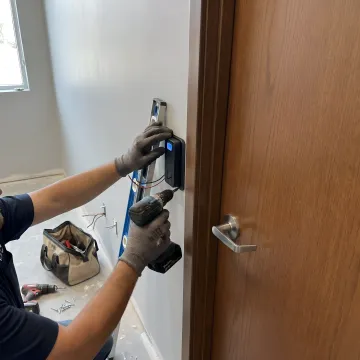
Commercial access control system costs vary based on facility size, number of access points, and integration requirements. A basic single-door biometric system starts around $450 per scanner, while enterprise deployments across multiple locations involve networked solutions with centralized management. Most businesses see ROI within 3-6 months through eliminated time theft, reduced credential management costs, and prevented security breaches. We offer pricing models that treat the system as an operating expense rather than capital investment, making advanced security accessible for businesses of all sizes.
What is commercial access control?
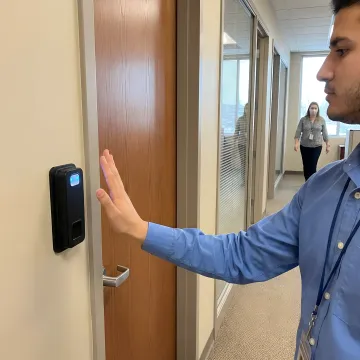
Commercial access control systems regulate who can enter specific areas of your business facility and when. Modern systems use biometric verification—like our contactless palm vein scanning—to confirm identity before granting access to buildings, server rooms, warehouses, or restricted zones. The system creates detailed audit trails showing who entered where and when, powers electric locks or turnstiles, and sends real-time alerts for security events. Unlike traditional key cards or PIN codes, biometric access control eliminates credential sharing, prevents unauthorized entry, and integrates with time tracking and visitor management systems.
Can your access control integrate with our existing security system?
Yes, our biometric scanners interface with existing access control systems using industry-standard Wiegand or OSDP protocols. This means you can enhance current infrastructure with advanced palm vein biometric verification without replacing door controllers, electric strikes, or mag-locks. The system works with most commercial access control platforms, turnstiles, gates, and vehicle barriers. For specialized applications like TWIC verification at critical infrastructure sites, we provide real-time TSA Cancelled Card List checking while maintaining compatibility with your existing gate systems and security protocols.
How does palm vein biometric technology prevent credential sharing?
Palm vein scanning reads the unique pattern of veins beneath your skin—a biometric identifier derived from 5 million data points that's impossible to replicate, even for identical twins. During each scan, the system checks for liveness to confirm a real hand is present, not a photograph or replica. Because the credential exists inside the body, it cannot be lost, shared, borrowed, stolen, or duplicated like key cards or PIN codes. This eliminates buddy punching, prevents terminated employees from accessing facilities with borrowed credentials, and creates an indisputable record of who actually entered your facility.
What happens if the biometric system goes offline?
Our systems are designed with redundancy and can operate in standalone mode if network connectivity is temporarily lost. Each scanner maintains local memory of enrolled users and continues verifying identities at the access point. Once connectivity is restored, all access events sync automatically with the central management system to maintain complete audit trails. For mission-critical applications, we recommend backup power solutions to ensure continuous operation during power outages. The system can also be configured with fail-secure or fail-safe modes depending on your security requirements and facility type.
How long does biometric enrollment take for employees?
Initial enrollment takes approximately 30 seconds per employee and requires no special training. Users simply hold their hand over the scanner three times to capture their unique palm vein pattern. Once enrolled, verification happens in under 2 seconds during daily use. The enrollment data is stored securely and works across all connected access points in your facility network. Because the biometric template is derived from internal vein patterns rather than surface features, it's not affected by cuts, dirt, or normal wear—meaning employees enroll once and the credential works reliably for years.
Can temporary workers and vendors access the facility?
Absolutely. The system allows you to enroll vendors, contractors, and temporary employees with time-bound, location-specific permissions. You can grant access that automatically expires after a set period or restrict entry to specific doors and zones. Real-time management means you can modify or revoke access instantly from the central system—crucial when contracts end or security situations change. The audit trail captures all vendor activity with precise entry and exit times, creating accountability for compliance requirements and helping you track who was on-site during specific timeframes.
What maintenance does the system require?
Our contactless biometric scanners require minimal maintenance due to their non-contact design—there are no fingerprint surfaces to clean or mechanical parts that wear out. Standard maintenance involves periodic cleaning of the scanner window with a soft cloth and routine software updates we provide remotely. Hardware includes a two-year warranty covering manufacturing defects. Most facilities conduct quarterly system health checks to verify network connectivity, backup systems, and access point functionality. Because the technology has no moving parts and operates contactlessly, it maintains high reliability with significantly less maintenance than traditional card reader or keypad systems.